Google Business Agent and Microsoft Brand Agents Compared
With so many different AI powered agents and systems rolling out, it can be challenging for business owners and busy marketers to keep up. In particular, we’ve heard some confusion between Google’s Business Agent and Microsoft’s Brand Agents. Both of which are currently in beta/early access as of writing this article. At Igniting Business, I have early access to both and have deployed them for clients already.
Google Business Agent and Microsoft Brand Agents are both AI-powered shopping assistants designed for ecommerce businesses, but they appear in completely different places and are powered by different ecosystems.
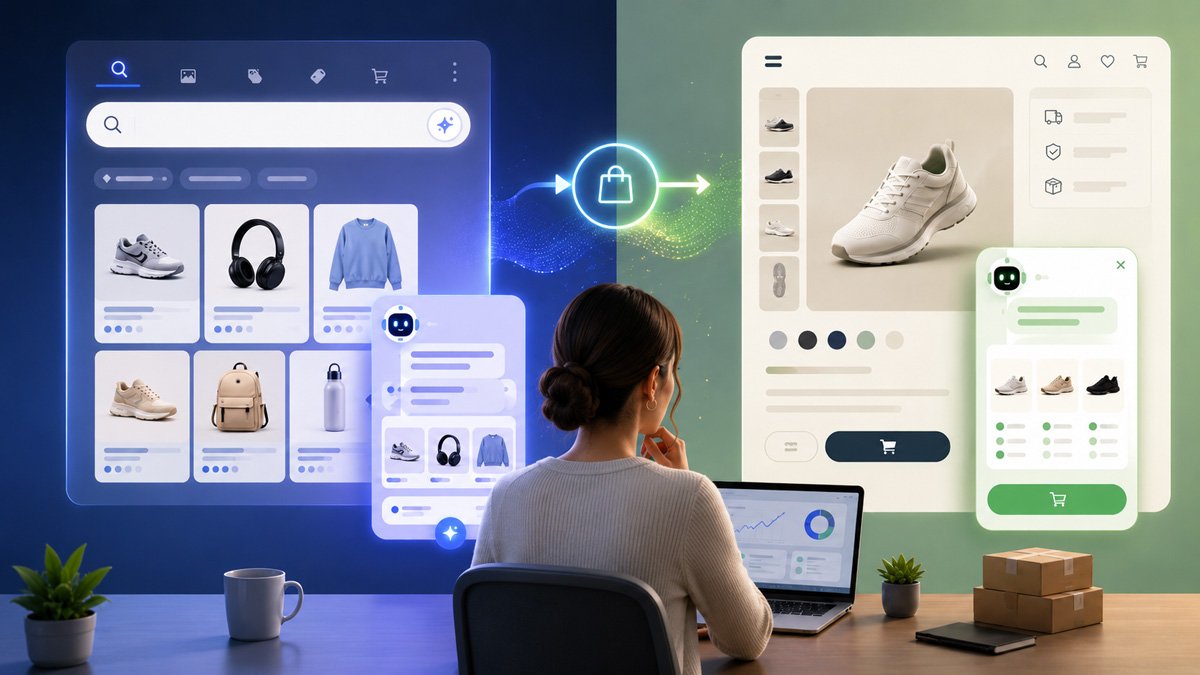
How Is Google’s Business Agent Different Than Microsoft’s Brand Agents
We hope that this quick comparison table helps you understand the difference between the two AI powered agent systems.
As we covered in our in-depth article on Microsoft Brand Agents, Microsoft’s version is a conversational AI shopping assistant designed to interact with customers and help boost sales. It appears as a chat experience directly on your website and can help answer product questions, shipping questions, return policy questions, and other common pre-purchase questions.
The key difference is where the conversation happens.
Google Business Agent helps shoppers interact with your brand inside Google Search. Microsoft Brand Agents help shoppers interact with your brand after they are already on your ecommerce website.
You can deep dive into how Google Business Agent works within our what is Google Merchant Center’s Business Agent guide.
How Microsoft Brand Agents and Google Business Agent Can Work Together
For eligible ecommerce businesses, these tools are not currently competitors based upon our understanding and direct testing of both agents. They can complement each other quite well. Google Business Agent can help engage searchers before the click directly within the search engine, while Microsoft Brand Agents can help answer questions and reduce friction after the visitor reaches your store.
At Igniting Business, we have deployed both systems for our eligible clients. If you’re an e-commerce website, we recommend that you also test both but watch them carefully for any mistakes or hallucinations. Continually monitor settings and configuration options since Google and Microsoft are both tweaking their systems and adding new features frequently.
To stay up-to-date on more e-commerce and marketing tools like these, subscribe to our free weekly newsletter designed for small business owners and busy multi-discipline marketers.