How to Get More Yelp Reviews for Your Business
Online reviews have long played an important role in helping consumers decide which local businesses to trust. While Google reviews tend to receive much of the attention from business owners, Yelp reviews are becoming increasingly difficult to ignore, especially as Yelp’s visibility expands beyond Yelp.com itself.
However, there is an important catch if you want to get more Yelp reviews: Yelp does not allow businesses to ask customers for reviews.
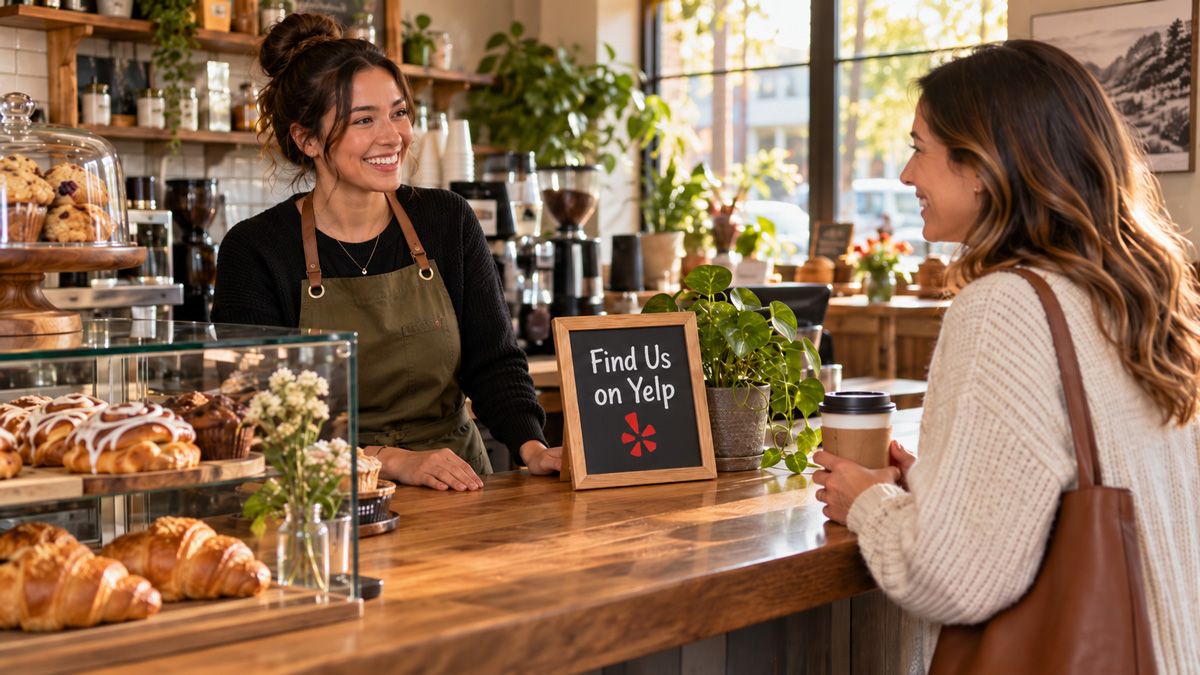
That makes increasing your Yelp reviews a little different from generating reviews on other platforms like Google, Facebook, Trustpilot, etc. Instead of directly requesting reviews, your goal should be to provide a review-worthy experience while making it extremely easy for customers to know your business is on Yelp and find your Yelp page.
Here are several ways to do exactly that.
Table of Contents
- Why Yelp Reviews Are Increasingly Important
- Can You Ask Customers for Yelp Reviews?
- Make Sure Customers Know Your Business Is Active on Yelp
- Thoroughly Complete Your Yelp Business Profile
- Link to Your Yelp Company Page from High-Visibility Places
- Why Some Yelp Reviews Aren’t Recommended
- Yelp Review Tactics You Should Avoid
- Focus on Earning Yelp Reviews, Not Soliciting Them
Why Yelp Reviews Are Increasingly Important
For years, Yelp has been one of the most recognizable online business directories and review platforms. In 2026, however, Yelp gained even more visibility across both traditional search engines and artificial intelligence (AI) platforms.
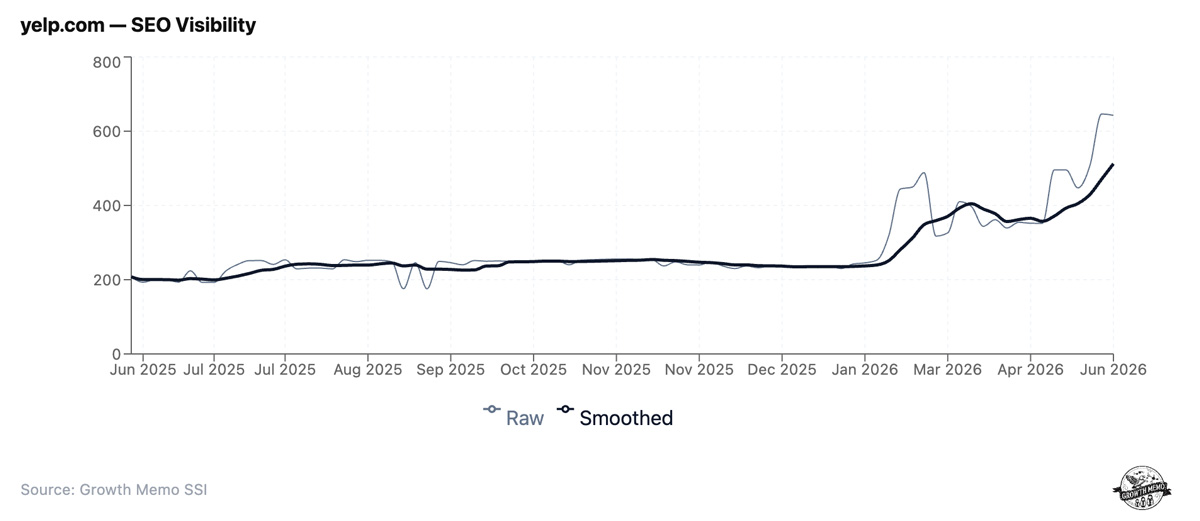
In June 2026, Kevin Indig (one of our favorite SEO researchers) reported in his Growth Intelligence Brief #20 that Yelp’s SEO visibility had reached the highest level recorded since his Search System Intelligence tracking began in November 2022. Yelp’s visibility increased approximately 29.7% in just four weeks, reaching an all-time high on June 1.
Yelp wasn’t just becoming more visible within traditional search results, either. During that same four-week period, Yelp’s mentions within tracked AI responses increased 39.1%, from 13,479 to 18,743 mentions.
Yelp’s information is also increasingly being used outside of Yelp itself. Yelp documentation notes that it provides Apple with access to some business listing information for potential use in Apple Maps, and Yelp offers partner APIs specifically for licensing its data to other platforms and services.
Perhaps even more significantly, in July 2026, Yelp entered into an agreement to provide OpenAI with real-time access to Yelp business information, ratings, reviews, and photos for use within ChatGPT’s local recommendations. The partnership was expanded further in August to allow users to make Yelp-powered restaurant reservations and join waitlists directly through ChatGPT.
In other words, maintaining a strong Yelp presence isn’t necessarily just about consumers who visit Yelp.com anymore. Your Yelp listing, and especially your Yelp reviews, can influence how consumers encounter and evaluate your business throughout the broader search and AI ecosystem.
Can You Ask Customers for Yelp Reviews?
No, you cannot ask customers to leave a review on Yelp.
This is one of the most important differences between Yelp and many other review platforms.
Yelp’s official Don’t Ask for Reviews policy is quite explicit: “Don’t ask anyone to review your business.”
Yelp applies that rule to customers, mailing list subscribers, friends, family members, and others.
Yelp explains that proactively solicited reviews can create biased ratings because businesses naturally tend to ask their happiest customers. Yelp’s recommendation software therefore attempts to identify reviews that appear to have been prompted or encouraged by a business and may decide not to recommend those reviews.
This is a distinction I’ve seen cause confusion for business owners. Review strategies that may be perfectly normal on other platforms—such as emailing a satisfied customer and directly asking for a review—should not simply be applied to Yelp.
Instead, think about Yelp differently:
Don’t ask customers to review you on Yelp. Make it easy for customers who already want to review you to find you on Yelp.
That distinction drives most of the recommendations below.
Make Sure Customers Know Your Business Is Active on Yelp
One of the simplest ways to attract more organic Yelp reviews is to make your Yelp presence visible.
Customers can’t independently decide to review your business on Yelp if they don’t know you’re there. Additionally, by letting customers know you are on Yelp, you subliminally encourage them to interact with, and possibly review, your business on Yelp.
Get a Free “Find Us on Yelp” Sticker
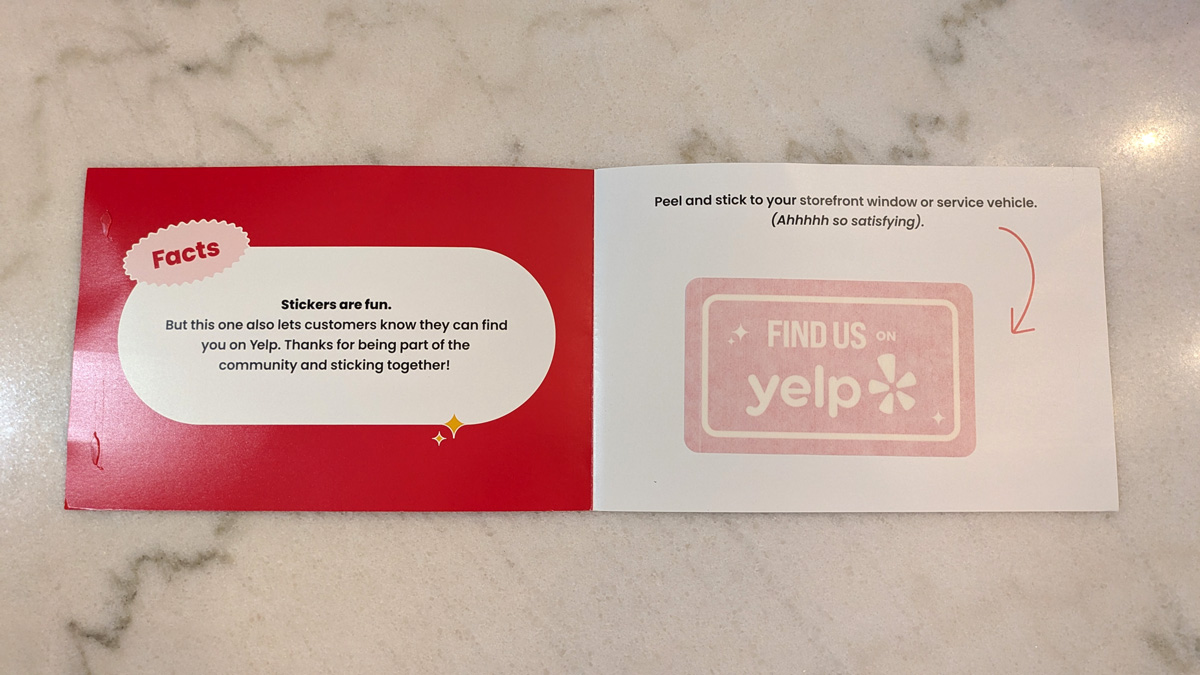
Yelp offers eligible businesses a free Find Us on Yelp sticker that can be displayed at your physical location.
Placing one near an entrance, checkout counter, reception area, or another highly visible customer area provides a subtle reminder that your business can be found on Yelp. Importantly, “Find Us on Yelp” is very different from “Please Review Us on Yelp.”
The first creates awareness. The second solicits a review, which violates Yelp’s policies.
We’ve put together detailed instructions explaining how to get a free Find Us on Yelp sticker.
Depending on your business, you could also consider other customer-facing Yelp materials or neutral signage near a reception desk, register, waiting room, or other logical location. Just keep the language focused on finding your business on Yelp, rather than asking customers to leave a review.
Thoroughly Complete Your Yelp Business Profile
Before worrying about getting more Yelp reviews, take a few minutes to make sure customers are actually finding a useful and professional-looking Yelp profile.
Claiming a Yelp Business Page is free, and Yelp currently provides businesses with more than 20 free profile features. A claimed page allows you to update important business information, upload photos, respond to reviews, add information about your business, and more.
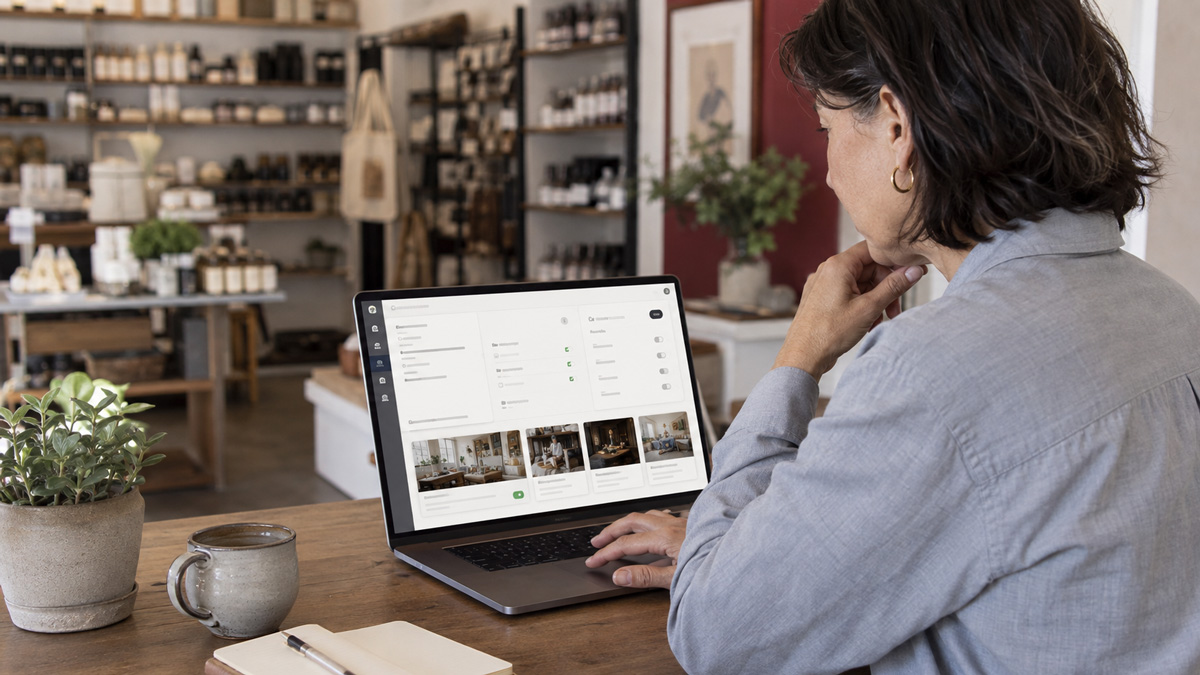
Go through your Yelp profile and complete every relevant free field available to your business, including information such as:
- Business name, address, and phone number
- Website
- Business hours
- Categories
- Services or specialties
- Business description
- Business history
- Owner or company information
- High-quality photos
The more useful your page is, the more likely someone who encounters it is to recognize that it is the correct business and engage with it.
Be Careful with Yelp’s Paid Profile Features
While Yelp provides plenty of free tools, not every profile enhancement is free.
For example, Yelp currently classifies adding your business logo as part of its paid Upgrade Package. Other upgrades can include Business Highlights, a customized call-to-action, control over featured photos, Yelp Connect, and removal of competitor ads.
That doesn’t necessarily mean those features aren’t worthwhile. It simply means you should evaluate them separately based on whether they provide enough value for your particular business.
My recommendation is to first maximize everything Yelp gives you for free before investigating and trying out paid options.
Link to Your Yelp Company Page from High-Visibility Places
Another way to help generate more Yelp reviews without directly asking for them is simply to make your Yelp profile easier to discover.
You certainly don’t need to place your Yelp link everywhere. Instead, consider which locations make sense based on how your customers interact with your business.
Potential locations to highlight your Yelp page link include:
- Email signatures: Add a simple “Find Us on Yelp” link or linked graphic alongside your signature details.
- Email newsletter templates: Include Yelp with the other platforms where customers can find your business.
- Your website: Consider adding Yelp to your website footer, contact page, or other section containing social media and business directory links.
- Social media profiles: If a platform allows multiple links, your Yelp profile may be worth including.
- Digital contact or resource pages: Businesses that maintain customer portals, online resources, or digital contact cards may have other natural opportunities to link to Yelp.
Don’t forget, wording matters! I’d recommend language such as:
Find Us on Yelp
rather than:
Review Us on Yelp
The objective isn’t to disguise a review request. It’s to legitimately make your Yelp presence easier for customers to discover.
Why Some Yelp Reviews Aren’t Recommended
Even if customers voluntarily leave reviews, you may notice that some reviews don’t appear within the primary review section of your Yelp page.
That’s because Yelp uses automated recommendation software to determine which reviews it believes are the most helpful and reliable.
According to Yelp, approximately three-quarters of reviews across the platform are recommended. Reviews that aren’t currently recommended are still accessible through a separate section, but they don’t count toward the business’s displayed review count or overall star rating.
Yelp states its recommendation system evaluates hundreds of different signals related to factors such as review quality, reliability, and user activity. The system is automated, and a review’s recommended status can change as the system receives updates or if suspicious behavior is detected.
Our goal is not to talk about tricks for forcing a review into the recommended section. In fact, aggressively soliciting reviews can potentially have the opposite effect if Yelp determines that those reviews appear to have been prompted by the business.
Yelp Review Tactics You Should Avoid
If you’re trying to figure out how to increase Yelp reviews, shortcuts can be tempting. Taking shortcuts is also a bad idea.
Avoid tactics such as:
- Directly asking customers to leave a Yelp review
- Sending review-request emails or text messages specifically directing customers to Yelp
- Only steering satisfied customers toward Yelp
- Asking employees, friends, or family members to review your business
- Offering discounts, freebies, gift cards, or other incentives for Yelp reviews
- Buying Yelp reviews
- Using a service that generates fake or manufactured reviews
Yelp specifically states, “Don’t offer freebies, discounts, or payment in exchange for reviews.”
Buying fake reviews can also go beyond violating Yelp’s policies. The Federal Trade Commission’s Consumer Review Rule prohibits businesses from buying fake or false reviews when they knew or should have known the reviews were fake, and prohibits incentives conditioned on reviews expressing a particular positive or negative sentiment. Read the FTC’s guidance on fake and incentivized reviews.
Trying to artificially inflate your Yelp reputation simply isn’t worth the risk.
Focus on Earning Yelp Reviews, Not Soliciting Them
So, how do you get more Yelp reviews if you can’t actually ask for Yelp reviews?
Earn them—and make yourself easy to find.
Deliver the amazing and memorable customer experience that people naturally want to talk about. Then, make sure your Yelp profile is accurate, complete, active, and visible enough that customers who choose to share their experience can easily find the correct business.
Prominently display your Find Us on Yelp sticker. Complete the free portions of your profile. Add appropriate Yelp links to your website, email signature, newsletter, or social media profiles. Make your Yelp presence obvious without turning those touchpoints into review solicitations.
Want more practical tips for improving your SEO, online reputation, website, and digital marketing? Subscribe to the Igniting Business free monthly newsletter for actionable strategies designed specifically for businesses that want to strengthen their online presence.