What Should You Include on Your Website’s About Us Page? 10 Essential Elements
Your website's About Us page is one of your best opportunities to introduce potential customers to the people, passion, and purpose behind your business. However, it's also one of the pages that gets the least attention from business owners when building a small business website.
At Igniting Business, we've worked with hundreds of small businesses on website design and search engine optimization (SEO). All too often, we discover that their About Us pages are little more than an afterthought, consisting of just a couple of paragraphs with generic company information and little that differentiates them from competitors.
That's a missed opportunity! As we explored in our article on how a quality About Us page can help boost your SEO, an informative and engaging About Us page can help establish trust, communicate your values, and provide useful information to both prospective customers and search engines.
So, what exactly should you include on your About Us page to make it as effective as possible?
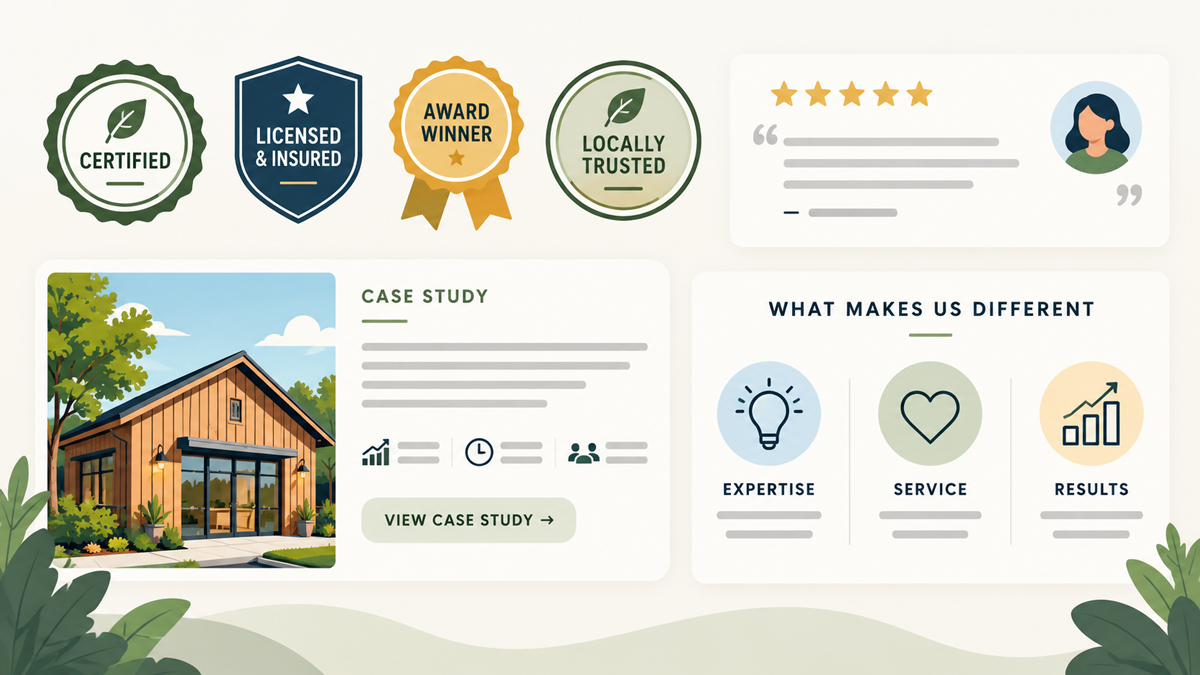
Let's explore ten important elements to consider, along with real-world examples and recommendations from our experience designing websites and developing content for our clients.
Table of Contents
- 1. Clearly Explain Who You Are and What Your Business Does
- 2. Share Your Company's Story and History
- 3. Communicate Your Mission and Core Values
- 4. Introduce Your Leadership and Team
- 5. Explain What Makes Your Business Different
- 6. Demonstrate Your Qualifications, Credibility, and Accomplishments
- 7. Include Accurate Company and Contact Information
- 8. Use Authentic Company Photos and Visuals
- 9. Provide a Clear Next Step with a Call to Action
- 10. Don't Forget About Organization Schema on Your About Us Page
- What if You Have Too Much Information for One About Us Page?
- Make Your About Us Page Work Harder for Your Business
1. Clearly Explain Who You Are and What Your Business Does
First and foremost, your About Us page should explain who your company is, what it does, and whom it serves.
Although this information may seem obvious to you, remember that some visitors will discover your business for the first time through your About Us page. Don't assume they've already explored your homepage or services. We’ve found that search engines, and especially AI systems, will often cite data from a company’s about page, which means it can also serve as a landing page.
Start with a concise company overview that answers these questions:
- What core products or services does your company provide?
- Who are your primary customers?
- What industries or geographic areas do you serve?
- What is your company's primary purpose?
While these details are important, remember that your About Us page shouldn't simply duplicate the sales copy from your homepage or services pages. Instead, provide just enough context for visitors to understand your company before exploring what makes it unique. You can always link to the specific service/products pages for more detail.
2. Share Your Company's Story and History
Every business has a story, and yours might be more interesting than you realize!
Explain how your business began, who founded it, and what inspired its creation. Include important dates, such as the company's founding year, along with meaningful milestones that have shaped its growth.
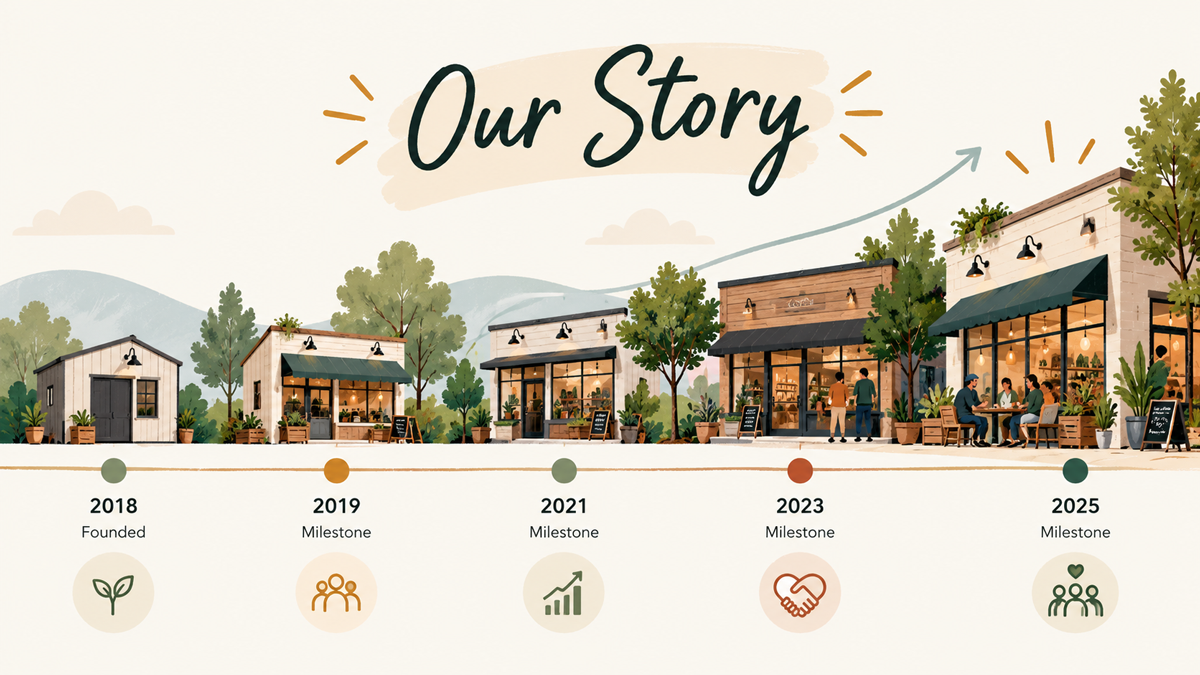
From our experience at Igniting Business, this is often where we uncover some of the most compelling content during our optional SEO copywriting process.
When interviewing small business owners, we frequently find that they initially provide fairly generic information about their companies. However, after asking more probing questions about their motivations, challenges, and experiences, we often discover unique founding stories that help distinguish their businesses from competitors.
Many business owners assume potential customers aren't interested in these details. In reality, the passion behind why you started your company can be one of the most relatable and memorable aspects of your brand.
Don't feel obligated to document every event in your company's history. Focus on the moments that help readers understand how your business became what it is today.
3. Communicate Your Mission and Core Values
What truly drives your business? What principles guide your decisions and shape how you treat customers?
Your company's mission and values deserve a prominent place on your About Us page, but they should be authentic rather than generic statements created simply because every company seems to have them.
For example, nearly every business claims to value quality and customer service. Rather than stopping there, explain what those commitments mean to your company and how they influence your daily operations.
At Igniting Business, we've shared our own mission, company history, and commitment to practicing a lifestyle of learning and leading with integrity on our company profile page.
I've personally had multiple new clients tell me that what they read about our values and why we do what we do influenced their decision to work with us.
That's a powerful reminder that customers aren't always choosing a company based solely on its products, services, or pricing. Sometimes, they're choosing the people and principles behind the business.
4. Introduce Your Leadership and Team
People like knowing who they're doing business with, particularly when choosing a company that provides professional services or requires a high degree of trust.
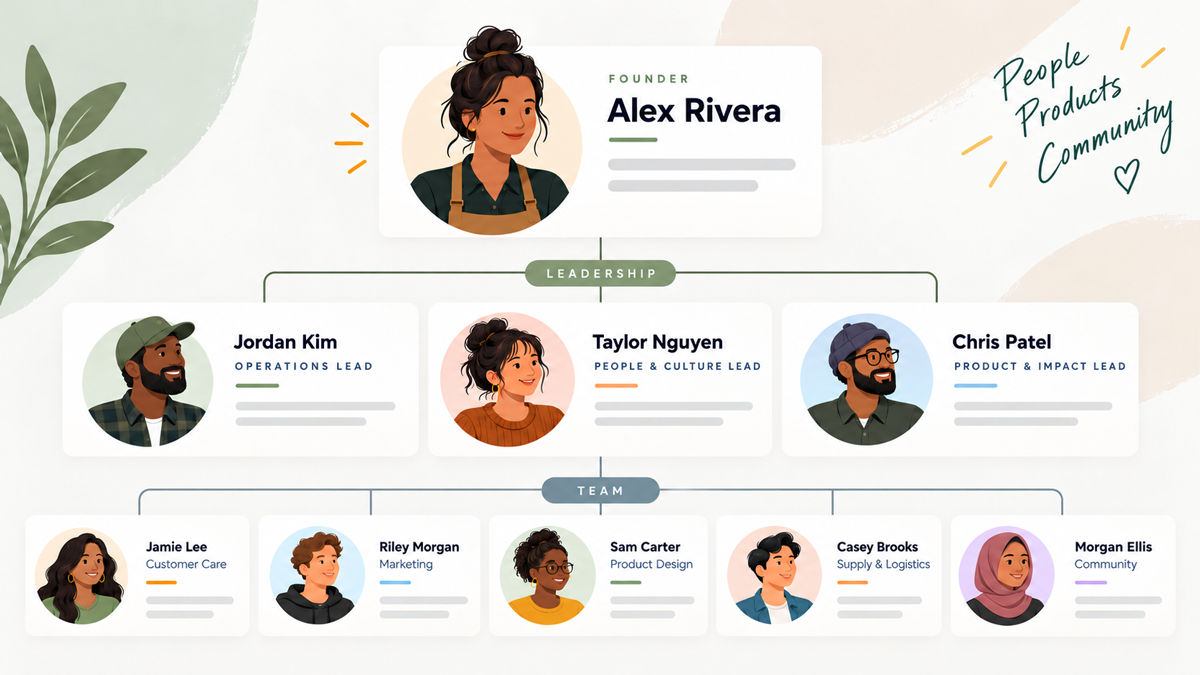
Consider introducing your company's founders, owners, and key leadership team members with links to their biographies where visitors can learn more about their backgrounds, responsibilities, and qualifications.
For a great example, check out NextGen Wealth's team page. The financial planning company combines its founder's personal story and philosophy with information about its professional team, credentials, and recognition.
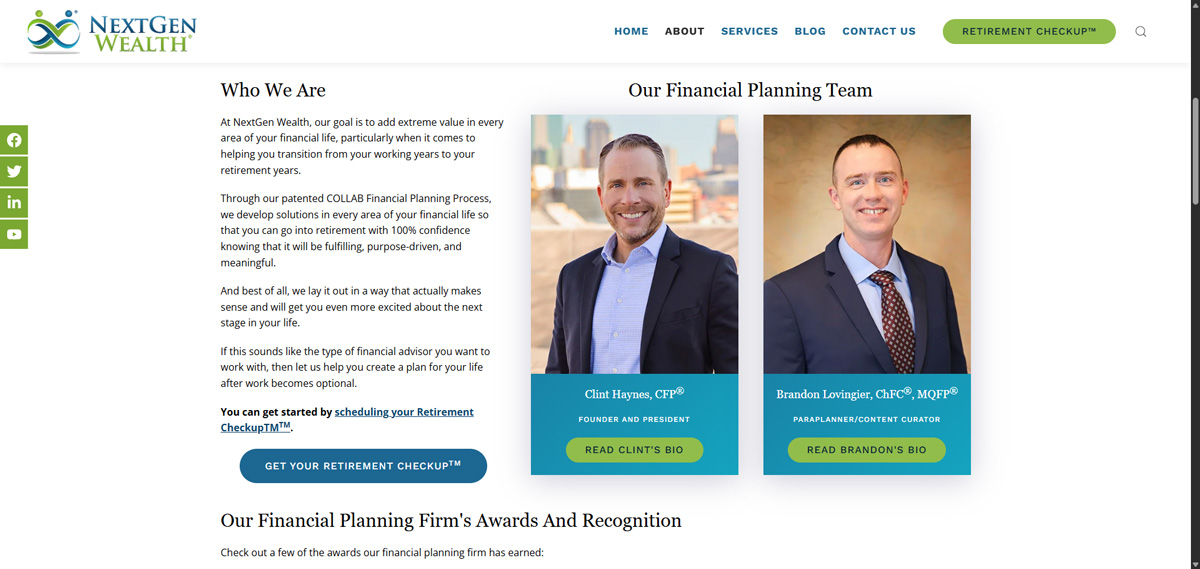 View NextGen Wealth’s Team Page
If your company has an extensive staff, you don't necessarily need to feature everyone on the main About Us page. Instead, highlight key personnel and link to a separate team page where visitors can learn more.
Remember, even the smallest of businesses can benefit from this approach. A solo business owner has a story and qualifications worth sharing too!
5. Explain What Makes Your Business Different
Why should prospective customers choose your company instead of a competitor?
Your About Us page is an excellent opportunity to answer this question without turning the page into an aggressive sales pitch.
Think beyond generic promises of quality, affordability, or exceptional service. Instead, highlight meaningful differentiators such as your company's specialized expertise, unique processes, customer relationships, or approach to solving problems.
For example, on the Koehn Building Systems About Us page, the commercial construction company explains how its owners remain actively involved in daily operations. One focuses on field operations and team relationships, while the other focuses on the company's vision.
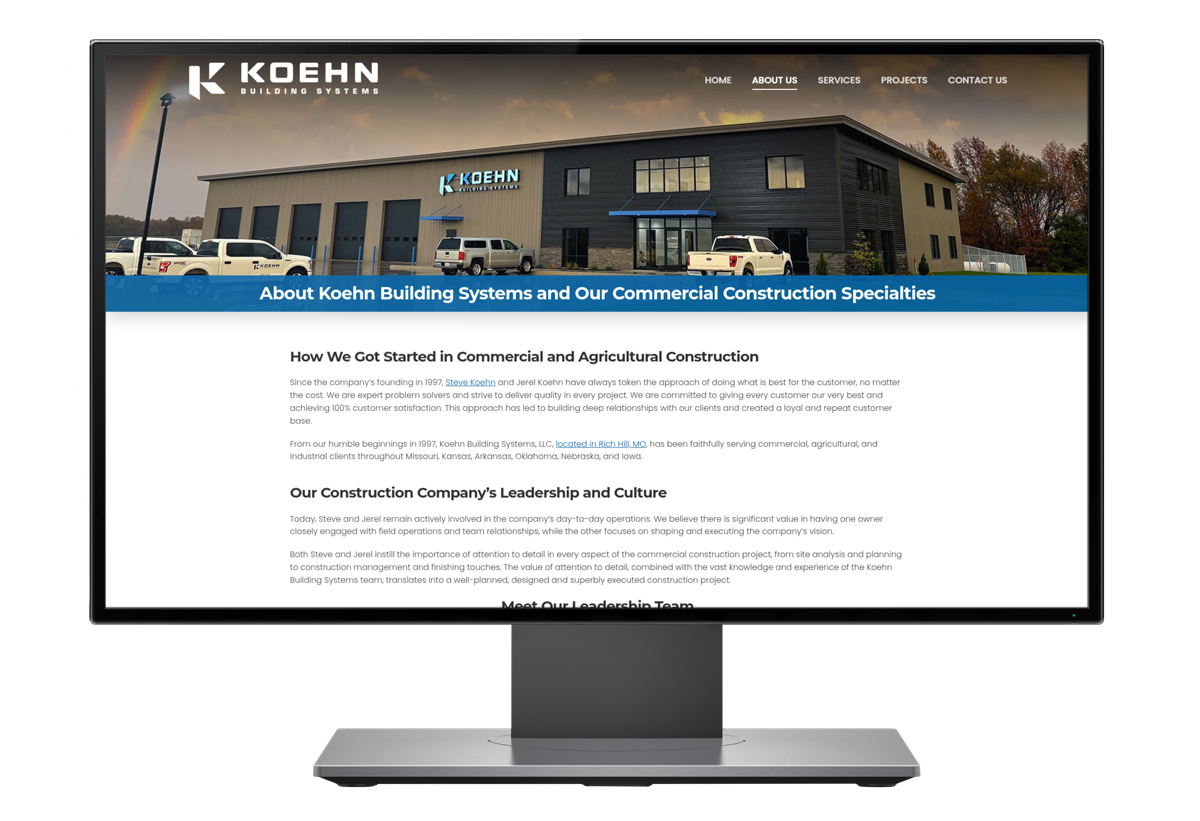
This offers visitors a more meaningful understanding of the company's leadership and customer-focused approach than simply claiming to provide outstanding construction services.
When developing your own content, ask yourself: What would a customer learn about our company that they couldn't reasonably assume about any of our competitors?
Your answer is likely worth highlighting.
6. Demonstrate Your Qualifications, Credibility, and Accomplishments
It's one thing to tell prospective customers that your company is experienced and trustworthy. It's another to provide evidence supporting those claims.
Your About Us page can showcase accomplishments and qualifications that help demonstrate your company's expertise and credibility.
Depending on your industry, the qualifications you list on your About Us page might include:
- Professional licenses, certifications, and accreditations
- Industry awards and recognitions
- Professional association memberships
- Highlights with links to notable projects, case studies, or measurable accomplishments
- Customer testimonials and success stories
For example, Koehn Building Systems includes a list of relevant construction certifications and training, while P1 Construction highlights its extensive company history, purpose, guiding principles, and depth of construction expertise.
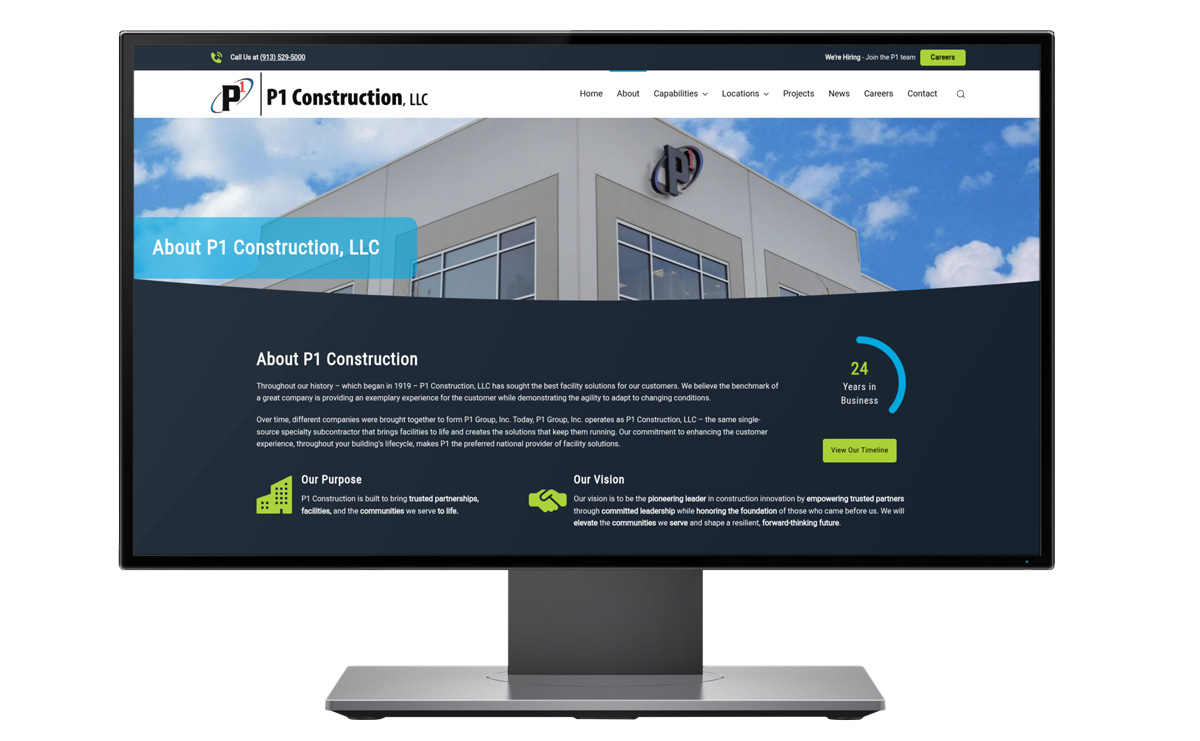
These details can help prospective customers evaluate a company's qualifications before making contact.
However, depending on your volume, you might not want to overwhelm readers with every award or certificate you've ever received. Highlight the accomplishments most relevant to your customers and, when appropriate, link to dedicated project, testimonial, or credentials pages.
7. Include Accurate Company and Contact Information
Your About Us page should also provide clear, accurate information that helps visitors identify and learn more about your business.
Depending on your company's structure, consider including your official business name, founding date, headquarters location, service area, and relevant contact details.
If you operate a local business, maintaining consistent company information across your website, Google Business Profile (GBP), and other online listings is particularly important.
You don't necessarily need to duplicate every detail from your Contact page. However, visitors should be able to easily find the information they need or follow a clearly labeled link to contact your team.
8. Use Authentic Company Photos and Visuals
A picture may be worth a thousand words, but only if it accurately represents your company!
Whenever possible, we recommend using original photography instead of stock photos on your About Us page.
Authentic images of your founders, employees, facilities, products, and team members performing their work give visitors an opportunity to see the actual people and environment behind your business.
For companies with a rich history, consider incorporating historical photographs, images of previous locations, or a visual timeline showing how the business has evolved.
Of course, professional photography isn't always feasible due to budget, scheduling, or other limitations. When stock photography is necessary, selecting the right images makes a significant difference. Look for high-quality photos that fit your industry, brand, and audience rather than generic images that could represent virtually any company. We've put together a detailed guide on how to find and select quality stock photos for commercial use to help you make better image selections.
Regardless of the source, optimize your images for website performance, include appropriate alternative text, and absolutely do not present stock or AI-generated people as actual employees!
9. Provide a Clear Next Step with a Call to Action
After someone finishes reading your About Us page, what would you like them to do next?
Even though your About Us page shouldn't be overly promotional, it should still provide visitors with a natural opportunity to continue engaging with your company.
Consider incorporating a relevant call to action (CTA) that encourages visitors to contact your team, request a quote, schedule a consultation, or explore your products and services. The best CTA depends on your business and the intent of your visitors. For more inspiration, check out our article on 10 types of calls to action to use on your website to increase your revenue.
10. Don't Forget About Organization Schema on Your About Us Page
Beyond the content visitors can see, there is another important consideration for helping search engines understand your business: Organization structured data, commonly referred to as Organization schema.
Structured data is a standardized way of labeling information on your website so search engines and AI systems can more easily interpret specific details about your business.
Organization schema can communicate information such as your company's name, founding date, logo, contact details, and links to official online profiles.
At Igniting Business, our approach often involves incorporating appropriate LocalBusiness schema on the homepage for qualifying local businesses, while implementing more comprehensive Organization schema on the About Us page to provide additional context about the company.
Google's Organization structured data documentation specifically recognizes the About Us page as an appropriate location for this information. The exact implementation should reflect your business type and avoid conflicting or unnecessarily duplicated information.
We've also seen the potential value of this approach firsthand.
For example, after implementing Organization schema on a client's About Us page, we observed Google subsequently incorporated details such as the company's founding date, founder, and other business information into its brand knowledge panel. These details were also represented in the visible content of the About Us page.
In our SEO work, we've also observed search engines and AI systems successfully reference company information that aligns with both the About Us page content and its structured data.
While these observations don't prove that structured data alone caused the information to appear, they reinforce the value of providing accurate, consistent information in formats that search engines can understand.
Our recommendation: Work with your website developer or SEO professional to implement relevant structured data that accurately reflects the information on your About Us page and elsewhere on your website. Avoid adding unsupported or misleading claims simply to populate additional schema fields.
What if You Have Too Much Information for One About Us Page?
If your business has decades of history, an extensive leadership team, or numerous accomplishments, you may struggle to fit everything onto a single About Us page.
Fortunately, you don't have to!
Consider using your main About Us page as a central company overview, with links to dedicated subpages covering your history, staff listing, careers/hiring details, or other important topics.
For example, we designed the website for Swift Print Communications, a St. Louis-based commercial printing company founded in 1912. With more than a century of history, the company has a fascinating story that deserves more attention than a short introductory paragraph.
Rather than overwhelming visitors with its entire history on the main About Us page, the website includes a separate company history page featuring a timeline of significant milestones and innovations dating back to its founding. This approach gives visitors a concise company overview while allowing those interested in learning more to explore the details.
Ultimately, your About Us content should be as comprehensive as necessary without becoming unnecessarily difficult to navigate.
Make Your About Us Page Work Harder for Your Business
Your About Us page shouldn't be treated as a formality or an afterthought. It's an opportunity to showcase your company's story, share what makes you unique, and give prospective customers meaningful reasons to trust your business.
You also don't need to incorporate every recommendation in this article. A newly established small business and a century-old corporation will naturally have different stories, qualifications, and accomplishments to share.
Focus on making an About Us page that is authentic, informative, and helpful to your customers. If you’d like more tips like these delivered directly to your inbox, please subscribe to our free monthly newsletter where we share in-depth insights about web design, SEO, and marketing.