Why You Must Respond to Every Review About Your Company
If you own or manage a small business, you probably already know that online reviews matter.
What is easier to overlook is the importance of responding to every single one of those reviews.
I often hear some version of this question from small business owners: “Do I really need to go back and respond to every single review?”
My answer is 100% yes.
That does not mean every response needs to be long; you don’t need to overcomplicate the process. It does not mean you have to stop running your business just to write review replies all day.
However, it does mean review responses should be treated as a real part of your marketing, reputation management, and local SEO strategy.

This applies most directly to Google reviews because of how visible they are in Google Search and Google Maps. However, it also applies to reviews on Facebook, Yelp, industry-specific directories, the Better Business Bureau, TripAdvisor, Healthgrades, Angi, and other platforms where customers may evaluate your business.
If people can find reviews about your company online, your responses matter.
Table of Contents
- The Real Reason Review Responses Matter
- Unanswered Reviews Can Hurt Trust
- Review Responses Can Support Local SEO and Visibility
- Negative Reviews Are Not Always Bad for Your Reputation
- Review Responses Help You Improve Your Business
- AI Search Makes Review Management Even More Important
- Responding to Every Review Is Worth the Effort
- Stop Procrastinating and Start Responding
The Real Reason Review Responses Matter
The biggest mistake businesses make with reviews is thinking the response is only for the person who left the review.
It is not.
Your response is also for every future customer who reads that review while deciding whether to contact you, request a quote, book an appointment, visit your store, or choose a competitor instead.
According to BrightLocal’s 2026 Local Consumer Review Survey, 97% of consumers read reviews for local businesses. That means reviews are not just a nice extra. They are almost always a critical part of the buying process.
Reviews Are Public-Facing Marketing Assets
A review is not just feedback. It is a public-facing marketing asset.
When someone leaves your company a positive review, they are publicly endorsing your business. When someone leaves a neutral or negative review, they are publicly describing a part of their experience that future customers may take into consideration.

Your response becomes part of that public record.
That is why I recommend treating review responses as part of your public marketing, not just customer service. A review response can reinforce your company’s values, show your work ethic, demonstrate professionalism, and help future customers understand how you handle feedback.
Your Response Is for Future Customers Too
When a customer reads your review profile, they are looking for clues.
They may be asking themselves:
Will this company communicate well? Do they care about customers? Are they professional? Do they seem active and responsive? What happens if something goes wrong?
Your review responses help answer those questions before the person ever contacts your business.
That is why responding to reviews is not just about being polite. Responding to reviews is about building trust.
Unanswered Reviews Can Hurt Trust
No response may feel neutral from the business owner’s perspective.
From the customer’s perspective, a lack of response can raise a red flag.

If a potential customer sees dozens of unanswered reviews, they may wonder whether anyone is paying attention. That may not be a fair assumption. Your company may be excellent at answering phone calls, replying to emails, and taking care of customers in person.
However, online perception matters.
When your review profile is public and visible, silence can create the wrong impression.
No Response Can Look Like No One Is Paying Attention
An unanswered review profile can make a business look neglected.
A profile with consistent, thoughtful responses looks active, engaged, and customer-focused. It tells people that your company is not just collecting reviews. You are reading them, learning from them, and appreciating the customers who take the time to share their experience.
That is especially important for small businesses.
Large brands may be able to get away with feeling impersonal. Small businesses usually cannot. One of the biggest advantages small businesses have is the ability to be more personal, attentive, and service-focused.
Review responses give you a simple way to show that you care more than the competition.
Responding Builds Confidence Before the Customer Contacts You
Most customers compare multiple companies before reaching out.
They may look at your website, your Google Business Profile, your reviews, your social media profiles, and your competitors’ listings. If one company consistently responds to reviews and another does not, the company that responds may look more engaged before the first conversation ever happens.
That can influence whether someone calls you or moves on.
BrightLocal’s 2026 research study also found that 85% of consumers are more likely to use a business after reading positive reviews. If positive reviews already influence customer behavior, your responses can help strengthen that confidence even further.
Responding Shows Appreciation for Happy Customers
Positive reviews are easy to overlook because they do not feel urgent.
That is a mistake.
A positive reviewer took time out of their day to publicly support your company. They helped strengthen your reputation, gave future customers more confidence, and provided social proof that your business delivers a good experience.
Responding is a simple way to say, “Thank you. We noticed. We appreciate it.”
That matters.
It also encourages a healthier review culture. When customers see that your business pays attention to reviews, they may be more likely to leave feedback themselves.
Review Responses Can Support Local SEO and Visibility
Trust should be the main reason you respond to reviews.
However, review management also connects to SEO and online visibility.
For small businesses, especially local service providers, restaurants, retail stores, medical practices, professional firms, and home service companies, Google Business Profile visibility directly influences leads and sales.
That makes review activity too important to ignore.
Google Reviews Matter Most, But They Are Not the Only Reviews That Matter
Google reviews are usually the most visible review source for local businesses because they appear directly in Google Search and Google Maps.
Google has also stated that more reviews and positive ratings can help a business’s local ranking. In addition, Google encourages businesses to reply to reviews as a best practice, explaining that public replies can help build relationships and trust with customers.
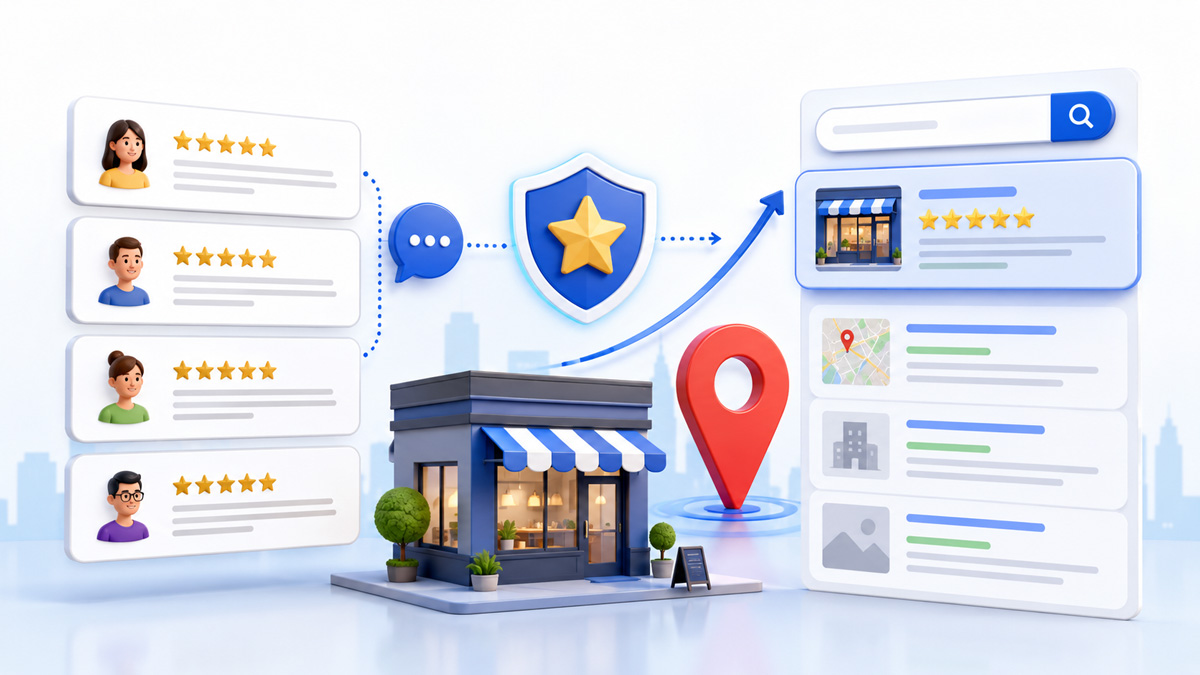
That does not mean responding to one review will instantly move your business to the top of Google Maps. Local SEO is more complex than that.
However, it does mean reviews and review management are part of a healthy local SEO strategy.
Some Platforms Look at Review Responses as a Signal
Different platforms use review responses differently.
Some may treat responses as a sign that the business is active. Some may factor review engagement into visibility within their own platform. Others may simply display responses prominently enough that they affect how users perceive the business.
Either way, the practical takeaway is the same: if a platform gives your business the ability to respond publicly, you should take that opportunity seriously.
At minimum, your response can influence the human being reading the review. In many cases, that is the most important “ranking factor” anyway.
It does not matter how visible you are if customers do not trust what they see.
Non-Google Review Platforms Can Still Influence Customers and SEO
It is tempting to focus only on Google reviews.
Google deserves the most attention for many businesses, but it should not be the only place you pay attention.
BrightLocal’s research found that the average consumer uses multiple review sites when choosing a local business. That means customers may be checking Facebook, Yelp, BBB, TripAdvisor, Apple Maps, industry directories, or niche review platforms depending on your business type.
Those platforms can matter in several ways.
They may rank in search results for your brand name. They may appear when customers search for “best” or “top-rated” businesses in your category. They may have their own internal search visibility. They may also be referenced by customers, competitors, or AI tools evaluating your company’s reputation.
Your reputation does not live on one website. Your reputation lives across the web.
Negative Reviews Are Not Always Bad for Your Reputation
No business owner wants negative reviews.
However, negative reviews are not automatically a disaster. In some cases, they can actually help build trust when handled well.
That may sound counterintuitive, but future customers do not only read the complaint. They also watch how the business responds.
Negative Reviews Can Build Trust When You Respond Well
A calm, professional response to a negative review can show future customers that your business takes feedback seriously.
Thoughtfully responding to negative reviews can show that you are willing to listen. It can show that you do not panic, argue, or attack when someone is unhappy. How you respond can show that you care about making things right when appropriate.
That kind of professionalism can build confidence.
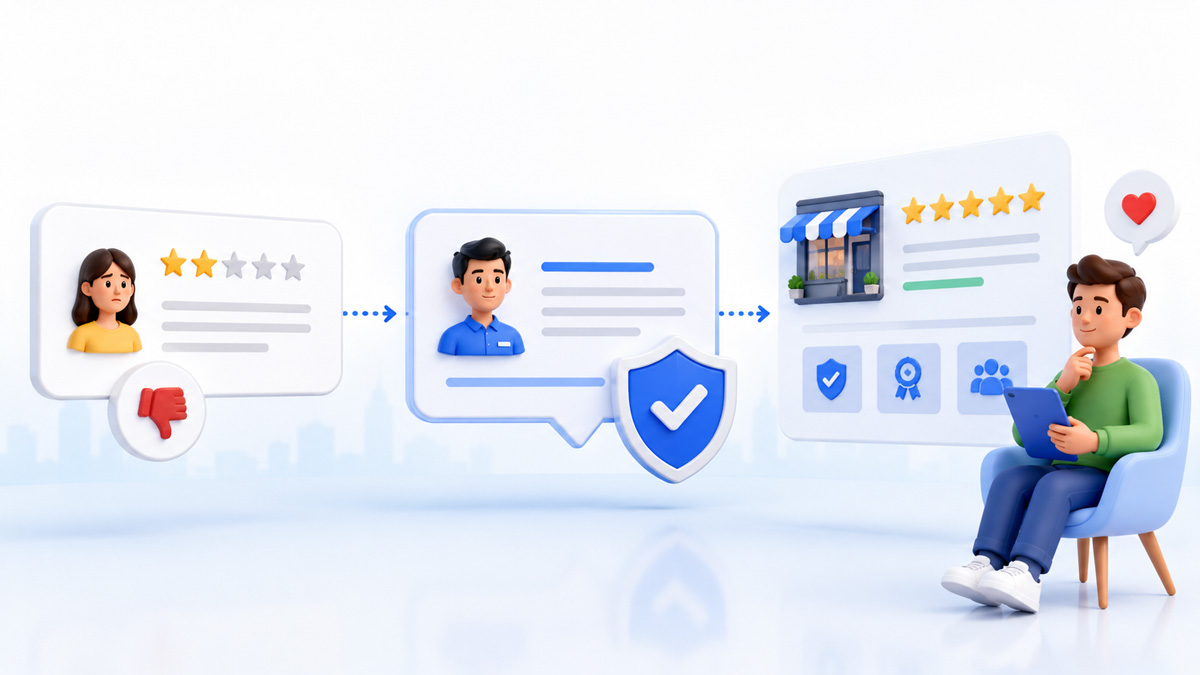
In some cases, a well-handled negative review may do more to demonstrate your company’s character than another generic five-star review.
Of course, negative reviews need to be handled carefully. You do not want to respond emotionally, share private details, or get pulled into a public argument.
If you need help with that, I have a separate article on how to respond to negative reviews.
A Perfect 5.0-Star Rating Can Look Suspicious
Many business owners understandably want a perfect 5.0-star rating.
There is nothing wrong with wanting excellent reviews. However, customers also know that no company is perfect.
A business with a flawless rating, especially across a large number of reviews, can sometimes raise skepticism. People may wonder whether the reviews are filtered, overly curated, or too good to be true.
A few less-than-perfect reviews do not necessarily destroy trust. In fact, they can make your review profile feel more authentic, especially when your company responds thoughtfully and makes the situation right.
The goal is not to look perfect. The goal is to be trustworthy.
Review Responses Help You Improve Your Business
Review responses are not only good for marketing. They are good for listening.
When you make review management a consistent habit, you start to notice patterns that can help you improve your business.
Reviews Reveal What Customers Notice
Customers may point out things you did not realize were important.
Reviews may mention a helpful team member by name who is excelling. They may praise your communication. They may appreciate your speed, cleanliness, friendliness, honesty, attention to detail, or follow-through.
Those details matter because they show what customers actually remember.
That can help you identify the parts of your customer experience that are worth emphasizing in your marketing.
Repeated Complaints Can Point to Process Issues
Reviews can also reveal problems.
One complaint may be an isolated issue. Multiple similar complaints may point to a process that needs attention.
Maybe communication is unclear. Maybe scheduling expectations need to be improved. Maybe customers are confused about pricing, timelines, instructions, or next steps. Maybe your team is doing something that makes sense internally but feels frustrating externally.
Responding to reviews forces you to stay close to that feedback.
That does not mean every reviewer is right. It does mean every review gives you an opportunity to evaluate what your company can learn.
Positive Themes Can Strengthen Your Marketing
Reviews can also help you understand your best selling points.
If customers repeatedly praise your responsiveness, that should be reflected in your marketing. If they talk about your professionalism, your quality, your friendliness, or your ability to simplify a stressful process, those themes may deserve more attention on your website and other marketing materials.
In that way, reviews do not just help prospects trust you. They can help you better understand what makes your business worth choosing.
AI Search Makes Review Management Even More Important
Search behavior is changing.
People are still using Google, but they are also using AI tools to ask for recommendations, compare companies, and summarize options.

That makes your public online reputation even more important.
AI Tools May Reference Public Review Content
BrightLocal has reported significant growth in consumers using AI tools for local business recommendations.
That does not mean AI has replaced traditional search or review platforms. It does mean public reputation signals may show up in more places than they used to.
AI tools and AI-powered search experiences may reference or summarize publicly available information about your company. That can include your website, business listings, third-party directories, reviews, and in some cases review responses.
If your business has a strong, consistent, well-managed reputation online, that gives these systems better public information to work with.
Your Responses Are Part of Your Broader Online Reputation
Many small businesses think of reviews as separate from the rest of their marketing.
I do not see it that way.
Your website, your Google Business Profile, your social media presence, your directory listings, your reviews, and your review responses all contribute to how people perceive your company online.
As AI tools and search engines continue to summarize information from across the web, your review presence becomes part of a much larger reputation picture.
That is another reason responding to reviews is worth the effort.
To test this, ask your favorite AI “What do you know about [company name’s reputation]?” Try this out with “Igniting Business” as the company name or your own brand.
Responding to Every Review Is Worth the Effort
If you are behind on review responses, catching up may feel overwhelming.
If no one on your team owns the process, it may require a change in responsibility. If you have reviews across multiple platforms, you may need a better reputation management system for monitoring reviews.
Even so, it is worth doing.
It Does Not Have to Be Complicated
Responding to every review does not mean writing an essay every time.
For most positive reviews, a short, sincere response is enough. For negative reviews, the response should be more careful, but it still does not need to become a public debate.
The key is consistency.
A simple, thoughtful response is better than silence.
Create a Simple Review Response Process
If your business does not currently respond to every review, start by creating a simple process.
Decide who is responsible for monitoring reviews. Decide how often reviews should be checked. Decide which types of reviews need to be escalated internally. Decide how your company’s tone should sound.
The more normal the process becomes, the easier it is to maintain.
Review responses should not be treated as a random task someone gets to when everything else is done. They should be part of your ongoing reputation management.
Learn How to Respond on Google
If you need practical instructions for responding to reviews on Google, I have a separate step-by-step guide on how to respond to Google reviews.
Stop Procrastinating and Start Responding
Responding to every review is not busywork.
Responding to reviews is a public signal that your business is paying attention. For small businesses, trust is one of the most valuable assets you have.
Review responses are one of the simplest ways to build that trust in public.
If you found this helpful and want more practical marketing tips for small business owners, subscribe to Igniting Business’ free monthly newsletter.