15 Factors That Impact Website Design Prices
If you’ve requested website design proposals from multiple companies, you’ve probably noticed that the prices can vary dramatically. How can the same request produce such different quotes?
Part of the answer is that a “new website” includes different things depending on the web design firm. One proposal might assume you’ll supply finished text and photos, while another includes professional copywriting and custom graphics. Other differences involve substantial behind-the-scenes work you may never notice by simply looking at the finished website.

I’ve been designing websites for over 20 years, and I’ve seen how easily these differences create confusion. Understanding the factors that impact website design prices can help you compare proposals and decide where your business should invest.
Table of Contents
- 1. Total Number of Pages
- 2. Copywriting and Content Editing
- 3. Photography, Videography, and Visual Assets
- 4. Complexity of the Visual Design
- 5. Website Functionality and Features
- 6. E-Commerce Requirements
- 7. Customization for Mobile Devices
- 8. Third-Party Integrations, Analytics, and Conversion Tracking
- 9. Content Management System (CMS) and Editing Capabilities
- 10. Training and Website-Specific Documentation
- 11. Review Process, Revisions, and Client Coordination
- 12. Project Timeline
- 13. Included SEO Work
- 14. Experience and Depth of Expertise
- 15. Ongoing Maintenance, Support, and Software Costs
- Understanding What Your Website Proposal Includes
1. Total Number of Pages
Generally, a larger number of pages correlates to a higher website design cost. Each page takes time to design and review, even if you provide all the content.
For a website redesign, consider how much existing content needs to move to the new website. Transferring a few service pages is a different undertaking from migrating hundreds of blog posts, downloadable resources, and project descriptions. Old formatting may need cleanup, and images and links may need attention during the redesign process.
Make sure the proposed page count reflects the content you actually want on the finished website, including existing material you expect to keep and new pages you want created.
2. Copywriting and Content Editing
Who will write the text content on your website? Providing finished copy, having an agency edit your drafts, and hiring a professional copywriter to write your content from scratch involve substantially different amounts of work.
Professional copywriting can significantly increase the project cost, especially when it involves learning your services, interviewing your team, and writing content that serves both potential customers and search engines.
We’ve had several clients initially plan to provide all their text content, then switch to one of our SEO copywriting packages after realizing how much time quality content actually requires. That’s why we try to discuss the client’s available time and in-house writing talent during the proposal process.
Writing the content yourself can reduce the agency’s fee, but remember to account for your team’s time, too.
3. Photography, Videography, and Visual Assets
Your website needs visuals, and how those visuals are created affects the total investment.

- Client-provided photos and videos: Existing material may reduce costs, although photo editing, cropping, or preparing files for the website can still require work.
- Agency-created photography or video: If the web design agency captures and produces the photos and/or videos, expect an additional cost.
- A third-party photographer or videographer: If you’re using a third-party to capture photos or videos, those fees should be included in your overall project budget, even if they are separate from the website proposal.
- Stock photography and video: Even if you’re using stock photography, licensing and the time spent finding suitable assets can also affect costs. Understand who is selecting the stock photos/videos and ultimately who will pay the bill for licensing those assets for commercial use.
Clarify whether a proposal includes sourcing and preparing visual assets or assumes you’ll deliver everything ready to use.
4. Complexity of the Visual Design
The degree of template usage and customization affects website pricing. A design that requires extensive customization will generally take more time than one that closely follows a pre-made template.
Custom icons, original illustrations, background videos, overlapping asymmetric elements, and creative scrolling experiences (“scrolly-telling”) can all add work. Our web design trends article explores several examples of web design trends and their tradeoffs.
Even a choice like a dark theme can introduce additional work. Logos and images may need adjustments to look good against dark backgrounds, and third-party widgets may need styling changes. Your team may also need guidance on preparing future images and logos. We cover these considerations in our pros and cons of dark theme websites.
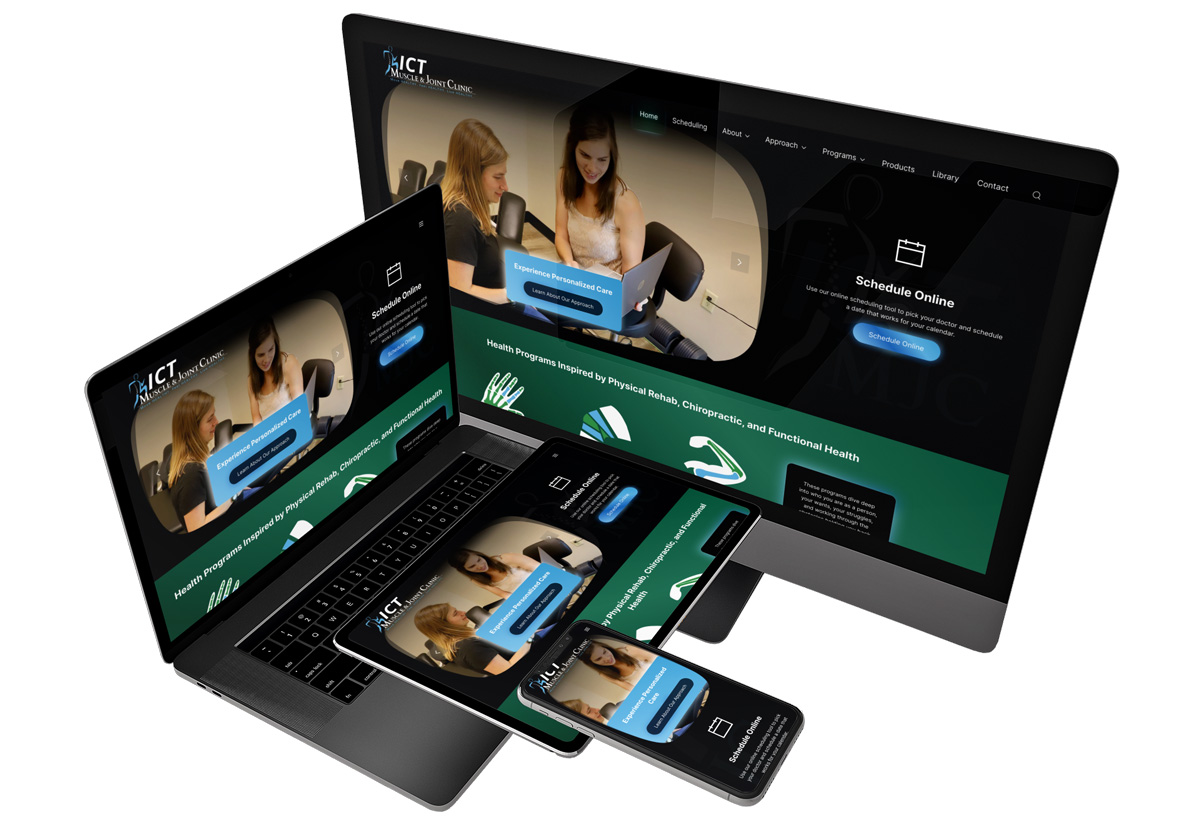
Visual design can overlap with functionality, and the full complexity of an idea may only become clear as its details are developed. Sharing examples of what you want early helps the designer estimate the work more accurately.
5. Website Functionality and Features
The features your website needs can have a substantial impact on its price. Examples of common website features include, but are certainly not limited to:
- Contact forms, lead forms, and hiring forms
- Interactive elements like popovers, custom calculators, etc.
- Project galleries and filtering tools
- Location maps
- Member-only content or customer portals
- Consent and cookie management
- Multilingual content and language navigation
Both the number of features and their complexity matter. A basic contact form and a hiring form with file uploads, conditional questions, and different notification recipients involve different amounts of setup.
Broad descriptions like “includes forms” don’t necessarily mean two proposals cover the same functionality.
6. E-Commerce Requirements
Selling products or services online adds requirements beyond those of a typical informational website. Product catalogs, variations, payment processing, shipping rules, tax calculations, security requirements, and connections to other business systems can make an e-commerce project considerably more expensive.
The details matter here, too. A small catalog with straightforward shipping is a different project from a store with thousands of products, complex variations, subscriptions, and inventory synchronization.
Your product data also affects the workload. Organized descriptions, images, and pricing are easier to work with than incomplete information that needs substantial cleanup before it can be imported.
7. Customization for Mobile Devices
Most businesses today expect their website to work on phones and tablets. However, “responsive design” does not tell you how much attention the mobile experience will receive.
There’s work involved in adjusting layouts, image crops, navigation, forms, and interactive elements for smaller screens. A design that technically “responsively adapts” to a phone may still be awkward to use.
The amount of mobile customization and testing across devices and screen sizes can affect pricing. This becomes especially relevant when a website includes complex layouts or features that need a different presentation on mobile.
8. Third-Party Integrations, Analytics, and Conversion Tracking
Connecting your website to a CRM, booking system, payment portal, chatbot, or other tool can range from straightforward setup to substantial custom work.
We’ve seen this firsthand with CRM integrations. Some CRM platforms make it easy to send website form submissions into the CRM and create new leads or update existing leads. One client’s CRM, however, required its own embedded forms, which were considerably less user-friendly on mobile devices. The platform’s restrictions affected the options available for the website.
Analytics and conversion tracking also vary in scope. Installing basic Google Analytics is different from configuring and validating tracking for phone calls, form submissions, bookings, or purchases. Comprehensive lead tracking tools such as WhatConverts can help connect leads to marketing sources, but that setup involves additional work and may carry ongoing subscription costs.
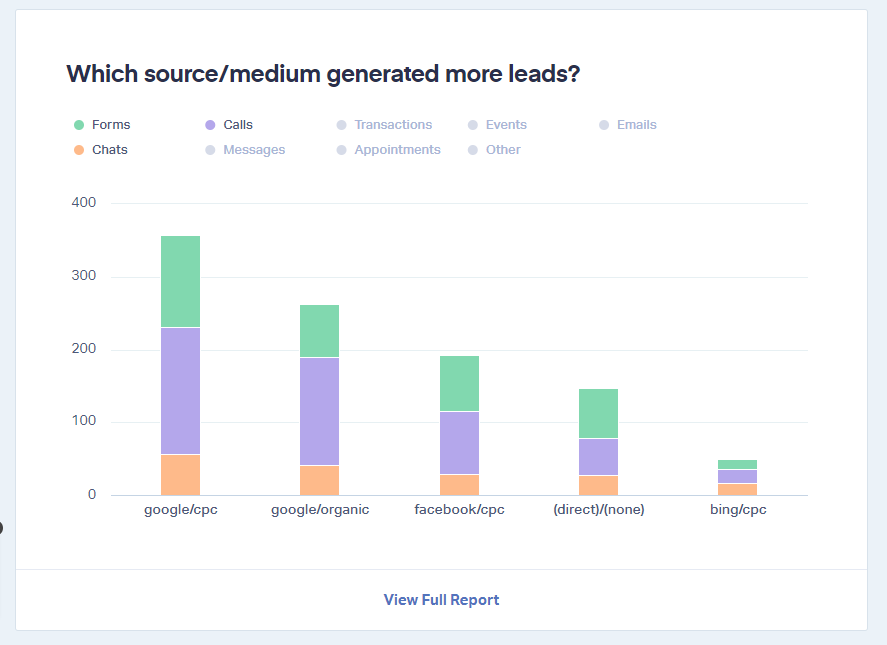
Identify the specific systems you need to connect and how they will be used when requesting a proposal.
9. Content Management System (CMS) and Editing Capabilities
A content management system, or CMS, helps you and your web design company update the website without manually editing the underlying code for every change. WordPress and Joomla are example of well-known and widely used Content Management Systems.
Platform choice, configuration, and customization can all affect pricing. Setting up editing tools, content fields, and user permissions takes work, but a CMS can also provide existing capabilities that reduce development time.
There isn’t a universal rule that a CMS website costs more than an HTML-only or AI-generated website. AI can be used with different platforms, and a custom-coded site can involve substantial development work.
The useful question is what you’ll be able to update and how much setup is needed to make those updates manageable.
10. Training and Website-Specific Documentation
Training and documentation require time to prepare and deliver, so their inclusion can affect the project price. Some designers provide little to no training, while others link to general platform tutorials or create guidance specifically for your website.
At Igniting Business, we break this cost out separately. We conduct a live training session with the people who may update the website and provide written documentation with visuals that are specific to the client’s website and features.
Proper training and website documentation helps clients feel equipped to make basic edits themselves. When comparing proposals, understand whether training is included and how closely it relates to your actual pages and features.
11. Review Process, Revisions, and Client Coordination
Designers typically account for review rounds and revisions in their pricing and contracts. A project with one revision involves a different commitment from one allowing multiple points of feedback and revisions.
The number of people involved can also affect the workload. Gathering feedback from several departments, resolving conflicting requests, and working through multiple approval stages takes time.
Understand what the proposal allows and how additional requests are handled. Changing a previously approved design or adding a feature can involve more work than adjusting text or swapping a photo.
12. Project Timeline
An accelerated deadline may increase the price if the agency needs to rearrange schedules or dedicate additional resources to your project.
You may also see inexpensive packages promising a website in a week. Those can involve a deliberately limited scope, templated designs with no customization, and requirements that leave you with a cookie-cutter quality and lack of internal review.
A short timeline alone doesn’t establish quality. The important question is whether the proposed schedule allows for the work that your specific project truly needs. If a substantial project is compressed without adjusting resources or scope, necessary steps may get rushed or skipped.
13. Included SEO Work
Website design and search engine optimization are different disciplines. A talented web designer is not automatically an SEO expert, and the SEO work included in proposals can vary significantly.
Examples include keyword analysis before writing or design begins, URL structure, redirects when URLs change, page titles, meta descriptions, image alt text, schema markup, XML sitemaps, page speed improvements, and more. These are examples, not an exhaustive list. The depth of work and expertise involved affect cost.
This matters especially during a redesign. We’ve taken over dozens of recently redesigned websites where the client reported a substantial decline in leads and loss in visibility. Two experiences illustrate how problems can slip through:
- An accounting firm’s new website discouraged search engine indexing. The previous designer had left a WordPress setting enabled that is commonly used during development. This setting communicated to search engines that the site did not want to be indexed in search engines. It should have been changed before launch.
- Another firm’s URL structure changed without redirects. The designer didn’t preserve the existing URL structure, and they also did not add 301 redirects to the replacement pages. Previously established rankings suffered, and existing backlinks led to 404 errors.
A newly designed website can look great while losing visibility in search engines. SEO work may be less obvious than the design, but it deserves equal attention when comparing project scope.
14. Experience and Depth of Expertise
The team’s experience influences both its rates and the judgment it brings to your project. That doesn’t mean an expensive website is automatically better than a more affordable one.
I designed my first website for a corporate client when I was 13. Yes, I was a teenager who often showed up in school in a suit or business casual thanks to bouncing between meetings and classes. As you can imagine, I charged a fraction of what established web design firms charged. That business needed an affordable solution, and the opportunity helped me get started. As my work improved and my expertise grew, my rates naturally increased.
You’ll encounter different prices from freelancers, small design studios, and agencies, with considerable variation within each group. Consider the experience relevant to your project, the people doing the work, and the capabilities included in the proposal.
15. Ongoing Maintenance, Support, and Software Costs
The initial website design and setup price typically excludes ongoing support, hosting, and web security services, although some providers bundle them into a recurring package.
Other continuing expenses may include CMS or extension updates, paid plugins, stock asset subscriptions, and third-party tools for bookings, chat, analytics, or CRM integrations.
Understand these costs before signing a website agreement. A lower upfront price doesn’t necessarily mean a lower total investment over the years you’ll use the site. Also clarify whether any initial post-launch assistance is included and when paid support begins.
Understanding What Your Website Proposal Includes
Website design prices vary because the work, expertise, and ongoing responsibilities vary. Two proposals can promise a similar-looking website while including very different services behind the scenes.
You don’t need every available feature or the most elaborate design. You do need a clear understanding of what’s included, what your team must provide, and what will cost extra. That makes it easier to choose a project scope that fits your business and budget.
For more practical website, SEO, and marketing guidance, subscribe to our free monthly newsletter. If you’re planning a new website or redesign and would like a quote for comparison, reach out to our team at Igniting Business.